 YR Sports Lab
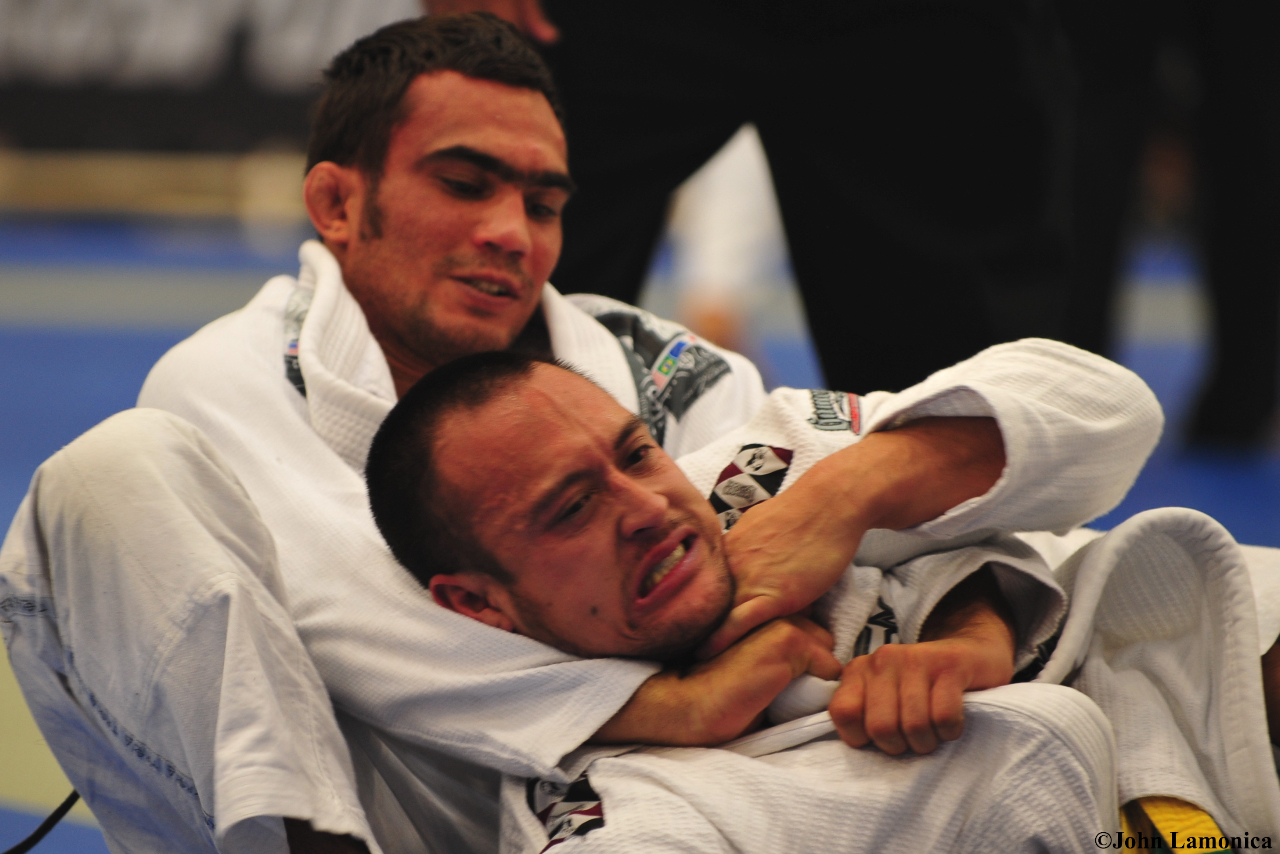
The Sliding Collar Choke (Japanese: Okuri-eri-jime) is a gi choke applied from behind: both hands grip the opponent's collar so that it compresses the blood vessels on both sides of the neck. It comes from judo's strangle system and in jiu-jitsu is usually applied from back control or from the top of turtle. Most people do not get stuck because they cannot find the collar. They get stuck because the first grip is too shallow and the second hand never removes the slack. This guide draws on Wikipedia, Olympedia, Digitsu, UltimateJiuJitsu and an official IBJJF article, and covers the judo origin, a famous 1964 Olympic match, the mechanics, counters and safety.
1. Origin and Story: From the Kodokan to the 1964 Tokyo Olympics
Okuri-eri-jime (送襟絞) is translated by Wikipedia as sliding lapel strangle, while Digitsu's entry is titled Sliding Collar Choke and lists Okuri Eri Jime as an alias. Wikipedia lists it as one of the twelve strangling techniques (Shime-waza) of Kodokan Judo, classed under grappling (Katame-waza), with the carotid arteries as the target. Digitsu's entry likewise says it originated in Kodokan Judo, is gi only, and goes by Zipper Choke and Cross Collar Choke as well.
Who brought it into Brazilian jiu-jitsu, and when, is something none of the sources I read documents reliably, so I name no one and invent no story. What can be said is that it carried real weight in competitive judo, and the match below is the clearest example.
Tokyo 1964: Isao Okano wins a quarterfinal with the sliding collar choke
Olympedia's page for the 1964 Tokyo Olympic men's middleweight (80 kg) records that Isao Okano of Japan beat Lionel Grossain of France in the quarterfinals with okuri-eri-jime. Grossain went limp, and the referee awarded ippon only after a Japanese coach pointed out that his legs were slack. Wikipedia's article on the choke also lists the match as an example, giving a time of 5:18.
Okano went on to win the final by ippon over Wolfgang Hofmann of Germany with yoko-shiho-gatame after 1:36, taking the gold medal (Olympedia). The point of the story is not who won. It shows the most sobering side of this technique: the person being choked may lose strength before anyone notices.
2. Mechanics: Deep Grip, Under the Armpit, Pull Back and Press Down
UltimateJiuJitsu's back-mount lesson and Digitsu's entry agree closely, and can be combined into the following sequence (right hand as the first hand):
| Stage | Key points |
|---|---|
| 1. Deep first grip | The right arm goes across the front of the neck and takes the collar very deep, thumb inside the collar and fingers outside (UltimateJiuJitsu); Digitsu adds that the wrist sits against the side of the neck |
| 2. Second hand under the armpit | The left hand goes under the opponent's armpit and grips the other side of the collar. Its job is to take out the slack so the collar is tight when you finish (UltimateJiuJitsu, Digitsu) |
| 3. Pull back, press down | Pull the right elbow back and push the left hand straight down (toward the hip, per Digitsu). UltimateJiuJitsu specifically warns against pulling the left hand out to the side |
| 4. Body positioning | Digitsu's extra details: keep the elbows tight, arch the hips, press the chest into the opponent's back, and extend slightly to bring their head toward you |
Digitsu also notes that the choke mainly restricts blood flow rather than air. That is part of its character, and it is why the person being choked may get little "can't breathe" warning.
3. Entry Timing and Setups
First, you already have back control with hooks or a body triangle holding you on. Digitsu lists back control as the position. For the position itself and its escapes, see BJJ back control.
Second, the opponent turtles and you are on top. Digitsu describes the setup as feeding your dominant hand deep into the far collar, sprawling your hips onto their back, then sliding the second hand palm-down along the near collar.
Third, pairing it with other back chokes for a double threat. Digitsu says it pairs with the Bow and Arrow Choke and the Rear Naked Choke to create dilemmas; see our articles on the Bow and Arrow Choke and the Rear Naked Choke. The collar choke applied from mount is a different technique, covered in Cross Collar Choke.
4. Strengths and Limits
| Strengths | Limits |
|---|---|
| Digitsu: mainly restricts blood flow to the neck rather than air, finished with the elbow pulling back and the hand pressing down | Digitsu: gi only; without a collar it does not work |
| Digitsu: pairs with the Bow and Arrow Choke and Rear Naked Choke to put the opponent in a dilemma | Common mistakes listed by Digitsu: a shallow first grip sits on the jaw and cranks instead of choking; pulling sideways or lifting the elbows loses power |
| Can be started from back control or from the top of turtle (Digitsu) | Hesitating lets the opponent tuck the chin; losing hip pressure or back control lets them sit up, turn or roll out (Digitsu) |
5. Common Counters
The defensive material comes mainly from Digitsu's entry. The other instructional pages I read give no full escape sequence, so each point below is attributed; treat them as references, not as the only answer.
Counter one: do not let the collar be gripped deep. Digitsu recommends a two-on-one grip on the choking arm to stop the attacker from feeding it deep into the collar. This is early prevention: deal with it before the collar is gripped deep.
Counter two: tuck the chin and raise the shoulders. Digitsu's defensive advice includes tucking the chin and raising the shoulders to block the path of the choke. This is the flip side of "hesitation gives the opponent time to tuck the chin": both point to acting early.
Counter three: turn toward the choking-arm side and flatten onto your back. Digitsu describes the escape as turning toward the side of the choking arm so you end up flat. If the attacker crosses their ankles in front of you for stability, Digitsu says you can bridge and attack the crossed feet with an ankle lock; Wikipedia's article on the choke also cites Renzo and Royler Gracie's Brazilian Jiu-Jitsu, Theory and Technique in its escapes section for a footlock counter to the back mount. Practise the details under a qualified coach.
If it is countered (top player's view)
The opponent has trapped your choking arm and the collar will not go deep. Do not pull harder. Digitsu says the Bow and Arrow Choke and the Rear Naked Choke pair with this choke, so you can switch to either and make the opponent defend two threats at once.
The opponent tucks the chin and lifts the shoulders. Secure back control and hip pressure first, then look for a new deep grip; do not keep pulling while you are losing position.
6. Frequency in Competition and Rules
IBJJF publishes only placings and brackets, not submission rates by technique, and I found no statistic specific to the Sliding Collar Choke (checked 2026/11), so no percentage is given for this move.
What can be cited is an analysis published on the IBJJF website by Danny O'Donnell on 2023/06/20 for the 2023 World Championships: across the adult male and female black belt divisions (quarterfinals through finals), there were 47 submissions, of which "choke from the back" accounted for 21, or 44.68%, the largest share; armbar had 10 and triangle 4. That category does not separate collar chokes from the Rear Naked Choke, so it shows only that back chokes as a group are common. It cannot be read as a figure for the sliding collar choke.
On rules, I did not check the IBJJF rule book clause by clause for belt-level limits on collar chokes, so I draw no conclusion; before competing, rely on the current-year official rule book.
7. Safety Notes
Digitsu describes the sliding collar choke as a blood choke that compresses the carotid arteries on both sides of the neck, and Olympedia's account of the 1964 match shows that the person being choked can lose strength without obvious struggle. On the medical side, I found no study quantifying injuries from this specific technique, so no incidence figure is quoted. For general choke safety, see BJJ choke safety.
・Tighten slowly instead of pulling all the way in one burst; the person being choked taps at the first sign of head pressure or narrowing vision
・When the partner taps, or the legs or arms suddenly go limp, release immediately
・Do not use the collar grip as a neck crank; when the first grip is too shallow, let go and regrip instead of forcing it
・Do not test your partner to the limit while warming up or before competition, and follow your gym's and the event's rules on belt levels
FAQ
Is the Sliding Collar Choke the same as the Cross Collar Choke?
Not exactly, though the names overlap. Digitsu lists the sliding collar choke (okuri-eri-jime) as a back-control gi choke, with Cross Collar Choke and Zipper Choke as aliases; our cross collar article covers the mount version.
Can you do the Sliding Collar Choke without a gi?
No. Digitsu marks this choke as gi only, because it depends on gripping the collar. Without a gi, the usual back-control choice is the Rear Naked Choke, covered in our RNC article.
Why can I grip the collar but not finish the choke?
The most common cause is a first grip that is too shallow. Digitsu and UltimateJiuJitsu both stress a deep first grip with the thumb inside, then the second hand under the armpit to take out slack, pull the elbow back and press the second hand down.
How do you escape the sliding collar choke from behind?
First stop the collar being gripped deep, then tuck the chin. Digitsu advises a two-on-one grip on the choking arm, chin tucked and shoulders raised, and turning toward the choking arm; if ankles are crossed, bridge into an ankle lock.
References
1. Wikipedia contributors. Okuri eri jime. en.wikipedia.org (checked 2026/11; supports the "sliding lapel strangle" translation, membership of the Kodokan's twelve strangles, the carotid target, the 1964 Okano v Grossain entry with a time of 5:18, and the citation of a Gracie book for the footlock counter)
2. Olympedia. Judo at the 1964 Summer Olympics, Middleweight, Men. olympedia.org (checked 2026/11; independent of the previous entry; supports Okano's quarterfinal win over Grossain by okuri-eri-jime, the referee awarding ippon after a coach's prompt, and the final won with yoko-shiho-gatame at 1:36 over Hofmann for gold)
3. Digitsu. Sliding Collar Choke (BJJ technique database entry, no publication date shown). digitsu.com (checked 2026/11; supports the aliases, gi only, carotid compression, grips and setups, common mistakes and defensive advice)
4. UltimateJiuJitsu. Sliding Collar Choke From the Back Mount (no publication date shown). ultimatejujitsu.com (checked 2026/11; independent of the previous entry; supports the two-handed grip with the thumb inside, the second hand under the armpit taking up slack, and the pull-back and press-down finish)
5. O'Donnell D. 2023 World Championships Submission Breakdown. IBJJF, 2023/06/20. ibjjf.com (checked 2026/11; supports 47 submissions from quarterfinals to finals in the adult male and female black belt divisions at the 2023 Worlds, 21 of them chokes from the back at 44.68%; the article does not separate collar chokes from the Rear Naked Choke)